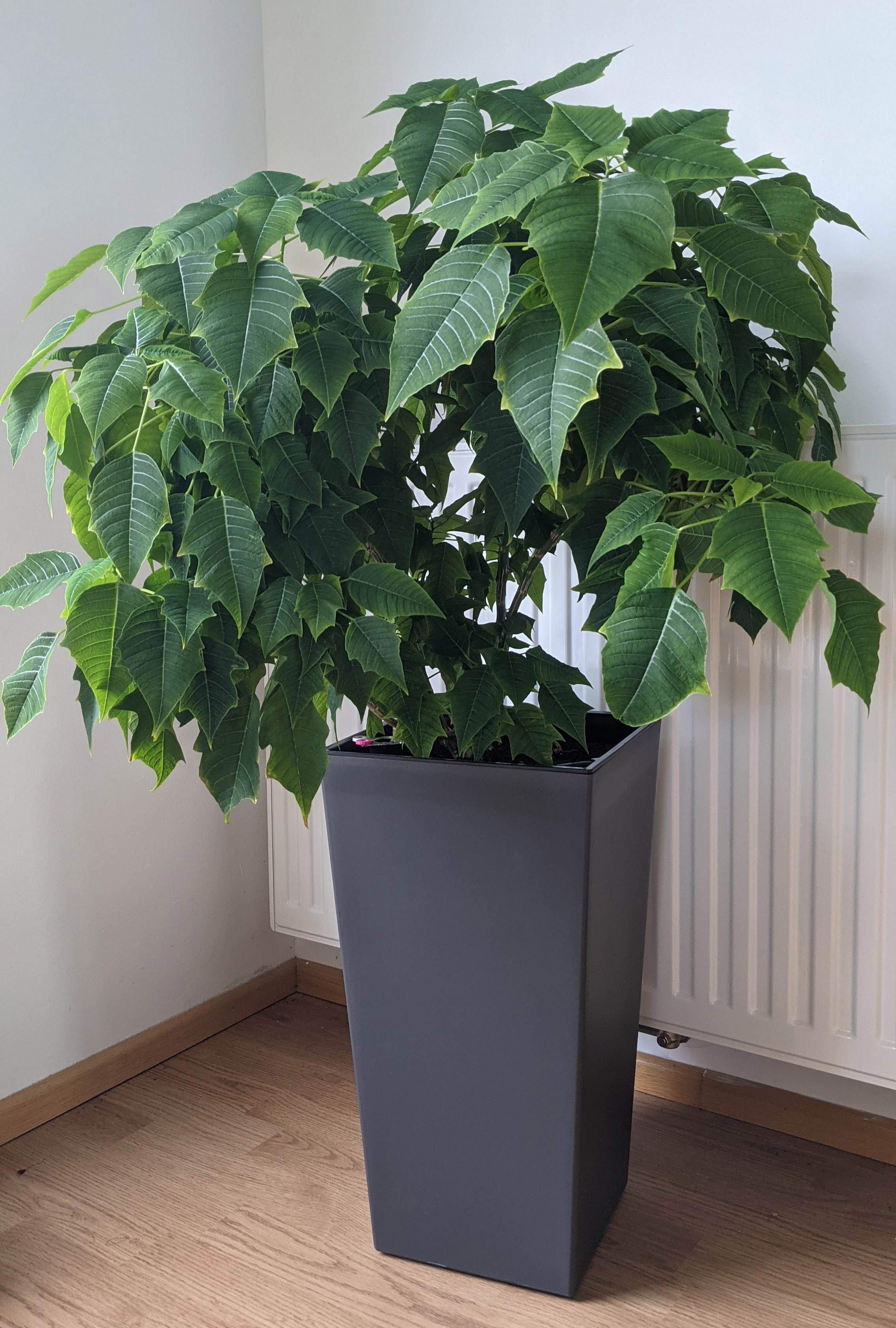
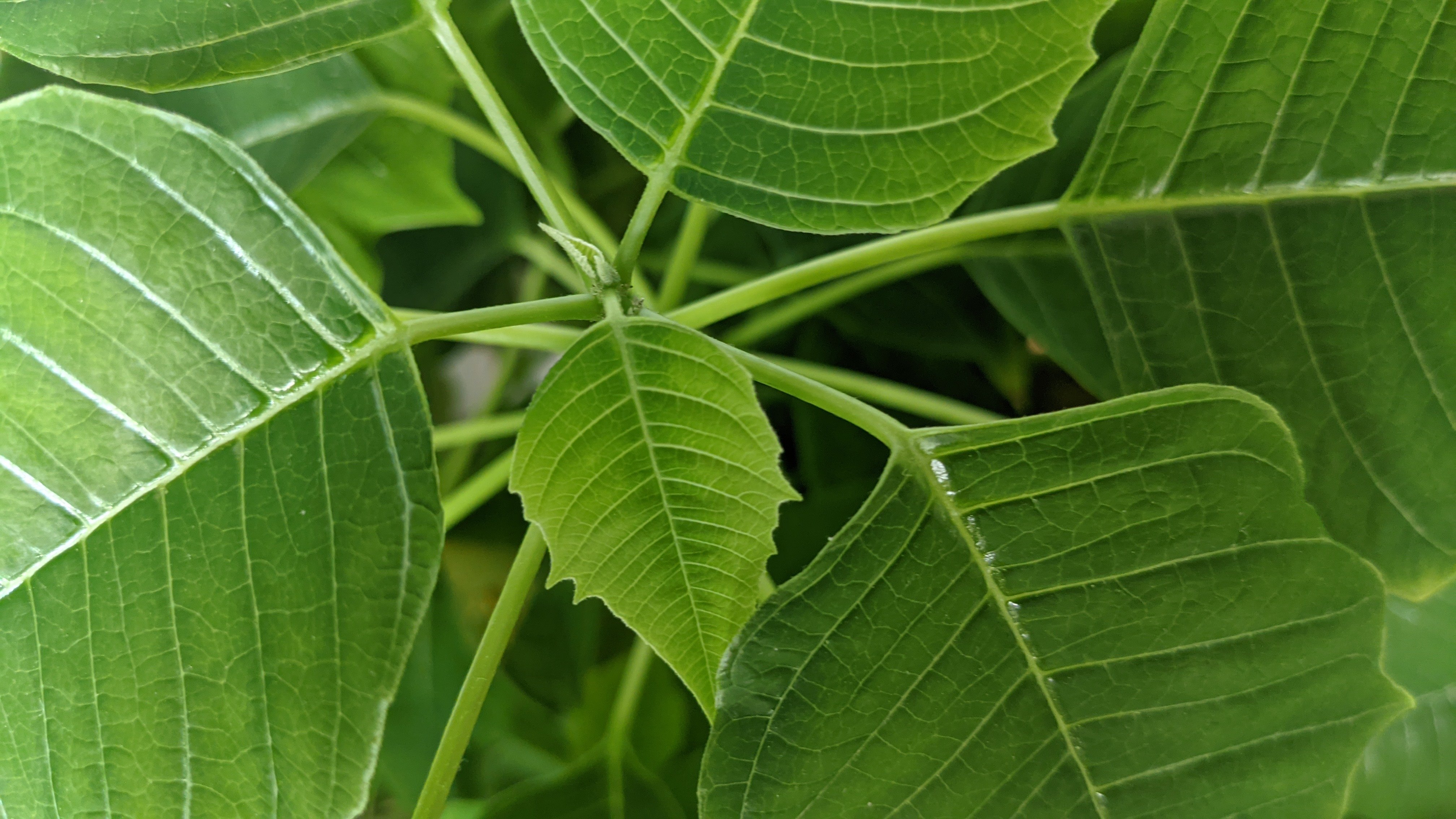
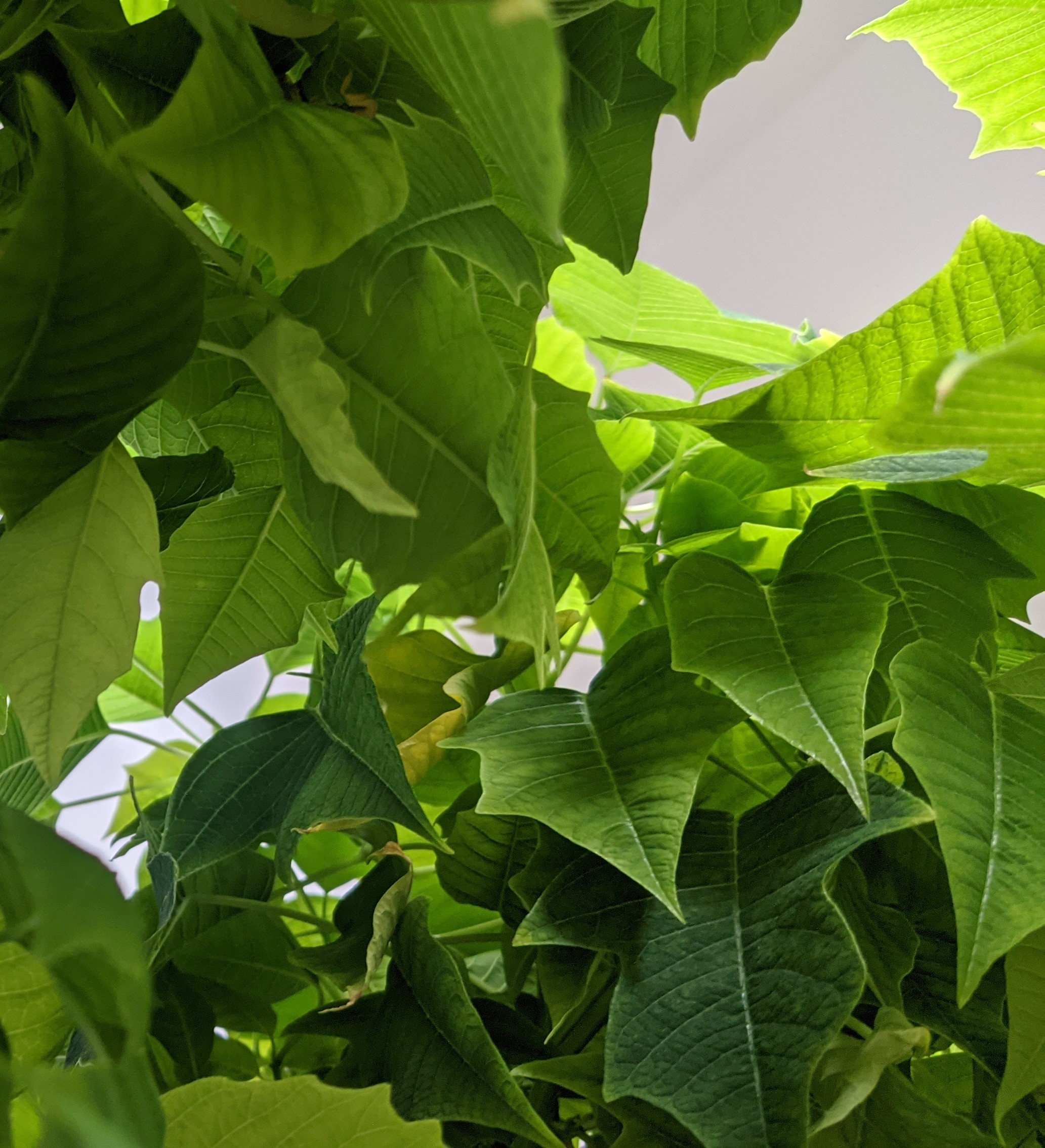
The white poinsettia plant (Euphorbia pulcherrima) was a gift from my mother and grandpa for christmas last year on the occasion of out move to Austria.
Plant-Friday is a category to showcase my plants, get to know more about them and it repeats weekly, to document the development of my indoor and balcony plants.
Description
The plant belongs to the family of wolf milk plants and is particularly well known by their colored blasts, which can be red, pink or white. Cultivated plants grow - in contrast to their wild ancestors with up to 5m heights - to small shrubs with the right care. It is originally from Mexico and is particularly popular in Advent & Christmas time. Their tiny flowers and colorful leaves are formed only in the winter months, as the plant is stimulated by short day periods.
Location
In winter, when most people get a poinsietta, a bright and sunny place is required. Direct sunlight is good in small doses. In summer (end of May to early September), a shaded place is preferred. The plant can also stand outside. From mid-September, a cooler location with little light must be made possible, so that the flowering can begin. For 6 to 8 weeks, a so-called short day preiod is needed. For this, the poinsietta may only get light a maximum of 10h, the less the better. For small plants a carton can be slipped over to help.
Care
Absolutely avoid waterlogging soil. Always water your plant with room temperatured water when the soil dried out. At high temperatures you should spray the leaves. As soon as the colorful blades are dropped, the shoots should be shortened for about a third. For the subsequent resting phase little water is needed. In summer new soil is recommended and it is possible to repot the plant. If no colorful leaves are developing it is probably due to the lack of stimulation by short day periods. While the plant is blooing, no fertilization is needed. From April to September liquid fertilizer can be given every 4 to 8 weeks.
Status 19. Aug 2021:
- Height: ca. 60cm
- Diameter: 55-65cm
- Wretched: 1
- Soil: cactus soil
- Location: indirect sunlight to the north
- Fertilization: 1x every few weeks with Compo öko balance, soon worm tea from the worm bin
- Previous care: waterlogging avoided, watered from below, draft avoided. Repotted in June into a pot with water tank.
- Resumé: Unfortunately I missed the time frame where I could have cut the plant back, now it is a small wild bush. Coincidentally i fertilized correctly. I am now excited to see if the plant will bloom again.